10 Latest Wedding Photography Trends in India for 2026
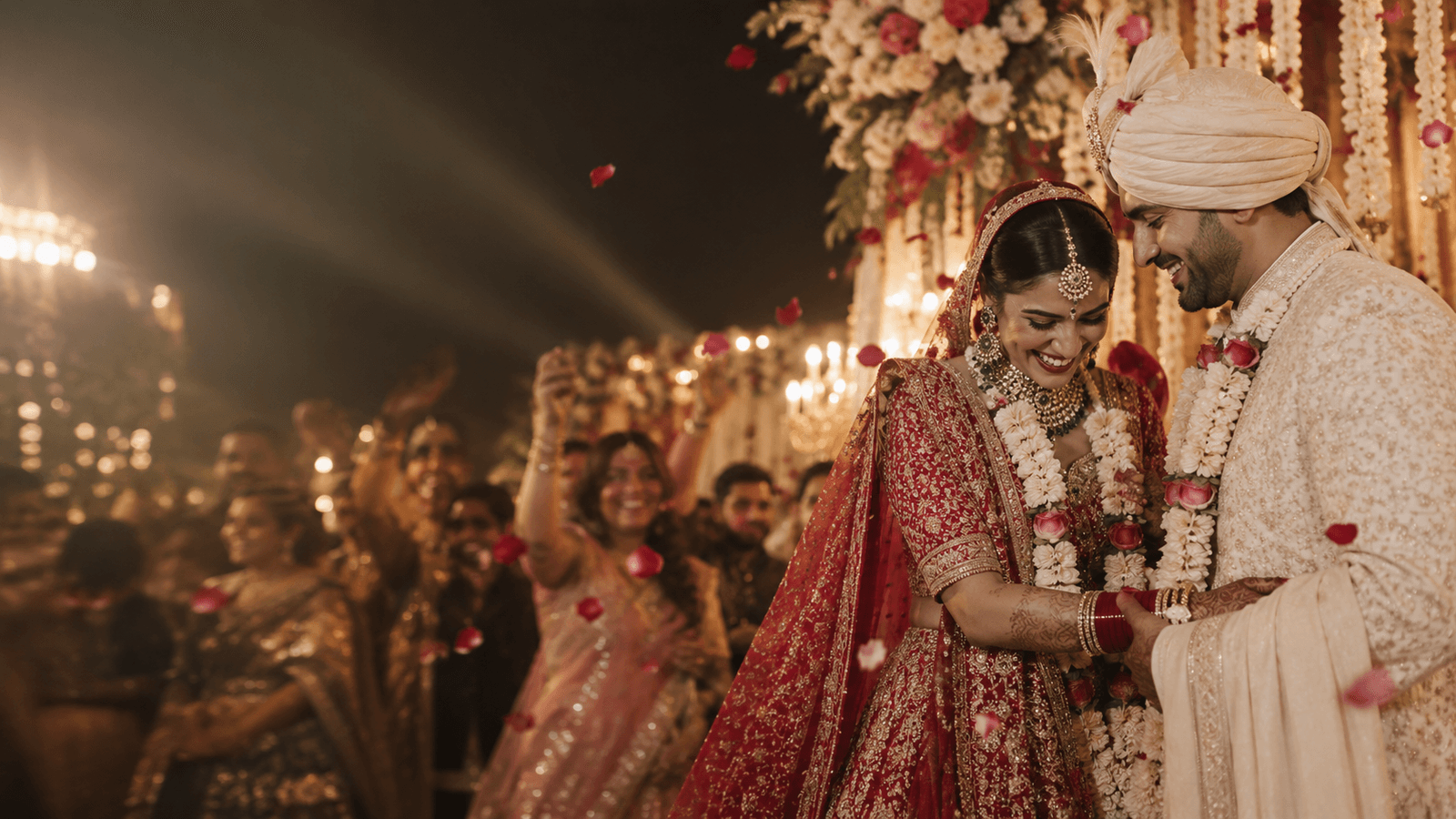
Wedding photography has changed dramatically.
Not long ago, a wedding album was expected to have perfectly posed portraits, elaborate couple shots, dramatic editing and a collection of photographs where everyone knew exactly where to stand.
Today, something different is happening. Couples still want beautiful portraits. They still want the spectacular mandap photograph, the perfectly framed bridal portrait and the grand family photograph.
But alongside those images, they increasingly want something harder to manufacture: the feeling of actually being there.
Wedding photography is moving from documenting how a wedding looked to preserving how it felt. Here are the trends shaping Indian wedding photography in 2026—and, more importantly, what they mean for you when choosing your photographer.
1. Photos That Feel Real, Not Over-Produced
The era of making every photograph look "perfect" is slowly giving way to images that feel lived-in. Natural expressions. Natural skin tones. Genuine interactions. A little movement. A little imperfection. The photograph doesn't necessarily need to look as though it was created for a fashion campaign.
Sometimes it simply needs to look like you. Current wedding-photography discussions increasingly emphasise sincerity over excessive retouching and highly stylised treatment.(Source: Vogue India)
What this means for you
When evaluating a photographer's portfolio, don't only look at the most spectacular five photographs. Look through an entire wedding gallery.
Ask yourself: "Does this feel like a real wedding—or a collection of beautiful photographs?"
The best wedding photographer should be able to give you both.
2. Emotion Over Aesthetics
A beautiful photograph is wonderful.
But a photograph that makes you feel something can become priceless.
Your mother's expression when she sees you dressed as a bride.
Your father's smile during the pheras.
The groom trying not to cry.
A grandmother watching from the corner.
Friends laughing when nobody is looking at the camera.
These aren't necessarily the photographs that win Instagram likes. They may, however, become the photographs your family treasures most. The current movement toward spontaneous interactions, humour, intimacy and genuine emotion reflects this shift away from perfection. (Source: Vogue India)
Don't ask only, "Will this photograph look beautiful?"
Also ask: "Will this photograph mean something to me years from now?"
3. Stories Over Poses
A wedding is not a photoshoot. It is a story. And your photographs should ideally tell that story. Instead of looking at your wedding gallery as a collection of individual "hero shots", imagine it as a visual narrative: Getting ready → anticipation → family → rituals → celebration → exhaustion → happiness → farewell.
This is why story-driven galleries are becoming increasingly important. Couples are paying more attention to how the photographs work together as a complete experience rather than simply collecting standalone Instagram-worthy images.
What to ask your photographer
Don't just ask:
"How many photographs will we receive?"
Ask:
"How will you tell the story of our wedding?"
That's a much more revealing question.
4. Documentary Photography—with Direction When It Matters
There is a misconception that documentary photography means the photographer simply stands in a corner and does nothing.
The best documentary-style wedding photographers are observing constantly. They know when to step back. And they know when to step in. They may help you find beautiful light, suggest where you stand for a portrait or gently arrange a family photograph—but once the scene is ready, they allow the moment to happen.
This creates an interesting middle ground: documentary feeling + intentional photography.
That balance is becoming increasingly important in modern Indian weddings.
The result?
Photographs that feel spontaneous—but don't feel accidental.
5. Direct Flash—Even in Daylight
Flash photography is back.
And it isn't necessarily waiting for the dance floor or dark reception. Direct flash can be used creatively even during daylight to produce photographs with a distinctly editorial, energetic and slightly nostalgic character.
Think:
hard light + sharp details + vibrant colours + deep shadows + attitude.
It can be particularly effective for:
Mehendi
Sangeet
Cocktail evenings
Baraat
After-party photographs
Fun couple portraits
But here's the important part:
Flash should be a creative choice, not a gimmick.
Your entire wedding shouldn't look like the same flash preset.
6. Real & Imperfect Over Perfect
This may be one of the most meaningful changes.
The little imperfections are often what make wedding photographs believable.
The bride's dupatta slightly out of place.
The groom laughing with his eyes closed.
A child running through a family photograph.
A friend photobombing a portrait.
Tears that weren't expected.
A hand covering someone's face during laughter.
The photographer doesn't always need to "fix" these things. Sometimes they should preserve them. The growing preference for spontaneous interactions and imperfect moments has been highlighted repeatedly in 2026 wedding photography discussions. (Source: Vogue India)
Because years later, you may look at that "imperfect" photograph and remember exactly what was happening.
7. Asymmetry Over Perfect Composition
For years, wedding photography leaned heavily toward symmetry.
Everyone centred.
Couple centred.
Mandap centred.
Bride looking directly into the camera.
But modern wedding photography is becoming more experimental.
The couple may occupy one corner of the frame.
A doorway may partially obscure the bride.
Guests may become foreground elements.
The photographer may deliberately leave negative space.
The frame may feel slightly off-balance—but visually interesting.
Why it works
Because real life isn't perfectly symmetrical. And breaking conventional composition can make a photograph feel more contemporary, editorial and personal.
Perfectly composed isn't the same as beautifully composed.
8. Let Indian Wedding Colours Live
Indian weddings don't need much help becoming colourful. From the bride's lehenga to marigolds, jewellery, décor, flowers, turbans and rituals—colour is part of the cultural experience.
One of the strongest current shifts is toward preserving that richness rather than heavily muting or transforming it through editing. Current trend coverage specifically highlights true-to-colour imagery and letting the natural palette of Indian weddings remain visible.
This doesn't mean photographs can't have an artistic colour grade.
It means: artistic doesn't have to mean artificial.
Your red lehenga should still look red. Your mother's saree should look like the saree she actually wore. And your venue should look like the venue you spent months choosing.
9. Golden Hour Still Matters
For all the new techniques coming into wedding photography, some things remain timeless.
Golden hour is one of them. That soft period shortly before sunset can produce beautiful, flattering light for couple portraits. But today's photographers are increasingly using it as part of the story rather than treating it as a mandatory "couple photoshoot."
You might see:
The couple walking together
A quiet conversation
A silhouette
A veil catching the light
The couple surrounded by the landscape
A wide environmental portrait
The important planning tip
Tell your photographer about your wedding schedule early.
If you want golden-hour portraits, the photographer needs to know where you'll be—and when. A five-minute delay can completely change the light.
10. Intimate Entries Over Grand Arrivals
Grand bridal entries and elaborate groom entries aren't disappearing. But another style is emerging alongside them: the intimate entrance.
Instead of making every entrance a production, some couples are choosing moments that feel more personal.
A bride walking in with her parents.
A groom quietly waiting before the baraat begins.
A couple entering together.
A small group of friends creating the celebration around them.
The emphasis shifts from:
"Look at this spectacular entrance."
to:
"Look at how these people felt in this moment."
And that can create photographs with considerably more personality.
The Biggest Trend of All? Make It Yours.
With so many trends, it's tempting to create a checklist:
✓ Documentary
✓ Flash
✓ Film
✓ Golden hour
✓ Editorial
✓ Drone
✓ Reels
✓ BTS
But your wedding doesn't need all of them. In fact, trying to incorporate every trend can make your wedding gallery feel less personal. Instead, think about three things.
What do you want to remember?
If family is everything to you, prioritise documentary coverage and relationships.
How do you want to feel when you see the photographs?
If you love fashion, add editorial portraits.
If you love nostalgia, explore film-inspired imagery.
If you love energy, use flash and motion.
What will still matter 20 years from now?
This is the question that should ultimately guide your photographer.
Because trends will change.
Editing styles will change.
Instagram will change.
Cameras will change.
But your mother's face when she sees you as a bride won't.
Your father's hug won't.
The way your partner looks at you before the ceremony won't.
And neither will the laughter of the friends who travelled across the country to celebrate with you.
How to Brief Your Wedding Photographer in 2026
Before you book your photographer, discuss these six things:
How much documentary coverage do you want?
How much time do you want for couple portraits?
Do you want editorial/fashion-inspired portraits?
Do you like natural or stylised colour?
Would you like direct-flash photographs?
Do you want your story documented before the wedding day?
And don't just look at a photographer's Instagram feed.
Ask to see a complete wedding gallery.
A photographer can have ten extraordinary photographs on Instagram.
What you need to know is whether they can tell your entire story.
The FounPro Take
At FounPro, we believe the future of wedding photography isn't about choosing between candid and posed, traditional and contemporary, photography and videography. It's about bringing the right combination together to tell your story. Because the best wedding photography shouldn't simply show you what your wedding looked like.
It should take you back to how it felt.
Planning your wedding? Explore FounPro Weddings and find the photography and videography experience that's right for your story.
Planning a shoot?
FounPro runs brand photo and video end to end — one consultant, pricing up front.